Minute 1-5
Count forwards and backwards
Say 36 to 46 together. Then count backwards from 46 to 36. If that feels easy, start at 67 instead.
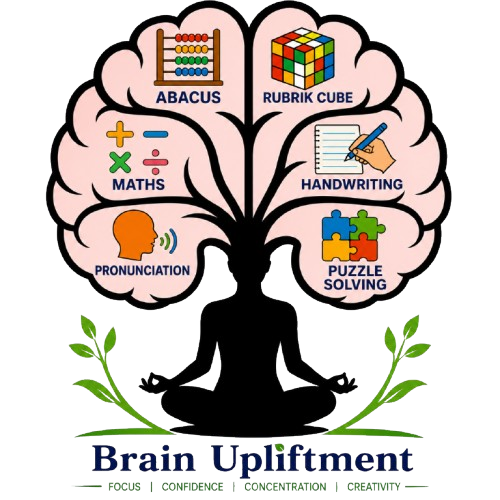 WittyWhiz
Brain Upliftment
WittyWhiz
Brain Upliftment
Each WittyWhiz lesson mixes number work, language, writing, and logic in a tight format that is easy for children to finish and easy for parents to follow.
Use this as a calm practice session at home. Read one step at a time and let the child write or say each answer before moving on.
Minute 1-5
Say 36 to 46 together. Then count backwards from 46 to 36. If that feels easy, start at 67 instead.
Minute 6-12
Ask: “What number has 4 hundreds, 3 tens and 7 ones?” The child writes 437, then says 400 + 30 + 7.
Minute 13-18
Try 38 + 27. Add the tens first: 38 + 20 = 58. Then add 7: 58 + 7 = 65. Ask the child to explain the split aloud.
Minute 19-23
Write 64, 46 and 56. Ask the child to circle the greatest number, then explain which digit they compared first.
Minute 24-25
Finish with: “Today I can…” Let the child name one skill, such as counting backwards or splitting an addition.
These activities give families a useful starting point. Keep the level easy enough for a successful finish, then make just one part harder next time.
Set 43 on an abacus. Add 12 by adding one ten first, then two ones. The answer is 55. Ask the child to say the tens and ones movement before touching the beads.
Read: “Riya has 18 stickers. Her aunt gives her 9 more. How many does she have now?” Circle the words gives and more, then write 18 + 9 = 27.
Choose one short sentence: “I can write neatly.” First trace it slowly, then copy it once, leaving a finger-width space between words. On the second copy, focus only on the height of the small letters.
Pick a word such as “ship.” Say it normally, then slowly: sh-i-p. Let the child watch their mouth in a mirror, repeat it three times, and use it in a sentence: “The ship is blue.”
Complete the pattern: 2, 6, 12, 20, __. The gaps are +4, +6 and +8, so the next gap is +10. The answer is 30.
Show three objects—a paper clip, a spoon and a ruler—and ask: “Which two could help you make a bookmark?” There is no single perfect answer; the goal is to hear the child explain a sensible choice.
At the end of a session, write the date and one observation: “counted backwards from 46 without help,” “left clearer spaces,” or “explained the pattern.” A short note is more helpful than a score because it tells you what to repeat. If a task causes frustration twice, make it easier for a day and return to it later.